Cut Ad Waste, Max ROI
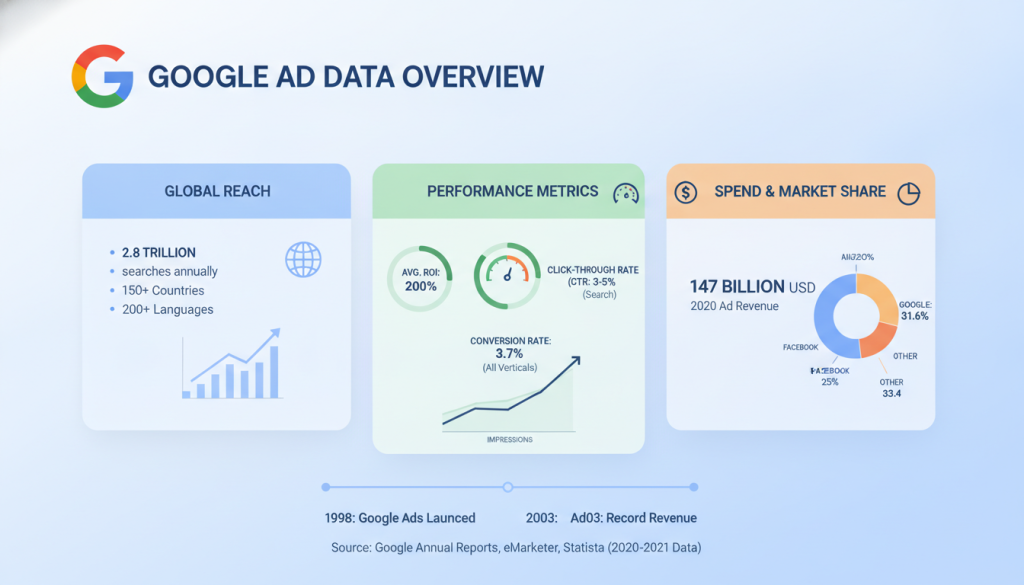
Reduce Wasted Ad Spend & Increase Profit Margins
To reduce wasted ad spend and increase profit margins, advertisers must eliminate irrelevant search terms, optimize audience targeting, and improve quality scores. By leveraging negative keyword lists, refining geographic targeting, and conducting regular bid audits, businesses can stop funding non-converting clicks. This reallocation of budget directly boosts return on ad spend and drives higher net profitability.
What is wasted ad spend and how does it impact profit margins?
Wasted ad spend refers to marketing budget consumed by clicks or impressions that have zero probability of converting into paying customers. This directly erodes profit margins by increasing customer acquisition costs without generating revenue, leaving less capital available for business growth, product development, or operational reinvestment.
In the digital advertising ecosystem, every click incurs a cost. When these clicks originate from users with mismatched search intent, automated bots, or audiences outside your serviceable area, your Cost Per Acquisition (CPA) artificially inflates. For example, a B2B SaaS company selling enterprise project management software might waste thousands of dollars if their ads trigger for the search query free project management templates for students. The user has no purchasing power, yet the advertiser still pays for the click, directly draining the gross profit margin.
The relationship between advertising efficiency and net profit margins is highly sensitive. Profit margins are calculated after deducting all operating expenses, including marketing. When you reduce wasted ad spend, every dollar saved falls directly to the bottom line. This means that optimizing an existing campaign to eliminate a twenty percent waste factor is often more financially impactful than increasing top-line revenue by twenty percent, as the saved capital requires no additional fulfillment or operational costs.
- Irrelevant Search Intent: Paying for clicks from users seeking free information rather than commercial products.
- Geographic Mismatch: Serving ads to users outside of your shipping zones or service areas.
- Placement Inefficiency: Having display ads appear on low-quality mobile gaming apps where accidental clicks run rampant.
- Audience Misalignment: Targeting demographics that historically show zero lifetime value (LTV) for your specific product category.
How do I identify and reduce wasted ad spend in my campaigns?
To identify and reduce wasted ad spend, conduct a comprehensive search term report audit to spot irrelevant queries triggering your ads. Implement robust negative keyword lists, refine audience demographics, and analyze placement reports to exclude low-performing websites or apps from your display network campaigns.
The Search Term Report is the most critical diagnostic tool for any search engine marketing campaign. Unlike the keyword report, which shows what you are trying to target, the search term report reveals the exact phrases users typed into Google or Bing before clicking your ad. Advertisers should review this report weekly, sorting by highest spend with zero conversions. Any query that clearly deviates from your core product offering must immediately be added to a negative keyword list to prevent future budget leakage.
Beyond search terms, identifying waste requires a deep dive into device and placement performance. Many advertisers fail to realize that their campaigns are bleeding money on mobile apps. By reviewing the Where ads showed report, you can identify specific URLs, YouTube channels, or mobile applications that generate thousands of impressions and clicks but yield zero sales. Excluding these placements at the account level instantly improves your Return on Ad Spend (ROAS).
- Audit Search Terms: Download your 90-day search term report and filter for queries with over ten clicks and zero conversions.
- Build Negative Keyword Lists: Create shared negative lists for universal exclusions like free, cheap, jobs, or DIY.
- Review Device Performance: Analyze cost-per-conversion across desktop, mobile, and tablet, adjusting bid modifiers accordingly.
- Exclude Mobile Apps: Proactively exclude app categories in display campaigns to prevent accidental fat-finger clicks.
What are the best strategies to increase profit margins from ads?
The best strategies to increase profit margins involve improving ad relevance to boost Quality Scores, which lowers your cost per click. Additionally, optimizing landing page conversion rates and implementing value-based bidding ensures you acquire high-lifetime-value customers rather than just driving cheap, unqualified traffic.
Quality Score optimization is a highly effective, yet often overlooked, strategy for margin expansion. Advertising platforms like Google Ads reward highly relevant ads with lower Costs Per Click (CPC). By ensuring tight alignment between your target keyword, your ad copy, and your landing page experience, you can achieve a higher Ad Rank for less money. A lower CPC directly reduces your Customer Acquisition Cost (CAC), widening the gap between your marketing expense and your gross profit on each sale.
Another critical strategy is shifting from volume-based bidding to value-based bidding. Instead of telling the algorithm to maximize conversions regardless of cart size, advertisers should utilize Target ROAS (Return on Ad Spend) bidding. This trains the machine learning models to prioritize users who are likely to spend more money or purchase high-margin products. When paired with strict Conversion Rate Optimization (CRO) on the landing page, you maximize the revenue extracted from every advertising dollar spent.
- Improve Quality Scores: Group keywords into tightly themed ad groups to ensure hyper-relevant ad copy.
- Implement Target ROAS: Shift bidding strategies to focus on revenue and profit margins rather than just lead volume.
- Optimize Landing Pages: Increase conversion rates by improving page load speeds, clearing calls-to-action, and reducing form friction.
- Focus on Customer Retention: Use remarketing lists to drive repeat purchases, which inherently carry a higher profit margin than acquiring new customers.
How much does wasted ad spend cost the average business?
The average business wastes approximately twenty to thirty percent of its total advertising budget on ineffective targeting and irrelevant clicks. For a company spending ten thousand dollars monthly, this translates to thirty-six thousand dollars annually in lost capital that could have been pure profit.
Industry benchmarks and constant account audits reveal a startling reality: the default settings on most advertising platforms are designed to maximize network reach, not advertiser profitability. Small to medium-sized businesses that launch campaigns without expert oversight routinely hemorrhage capital through broad match keywords and unmonitored display network expansions. It is not uncommon for initial account audits to uncover campaigns where up to fifty percent of the budget is spent on terms completely unrelated to the business’s core offering.
The true cost of wasted ad spend extends beyond the immediate financial loss; it represents a massive opportunity cost. Every dollar wasted on a fraudulent click or an irrelevant search term is a dollar that could have been invested in a top-performing exact match keyword or a high-converting retargeting audience. By recapturing that twenty to thirty percent waste and reinvesting it into proven, profitable segments, businesses can experience exponential, rather than linear, growth in their profit margins.
- Small Business Impact: A $5,000 monthly budget with 25% waste loses $15,000 annually.
- Enterprise Impact: A $100,000 monthly budget with 20% waste bleeds $240,000 annually.
- Opportunity Cost: Lost potential revenue from high-converting keywords that were paused due to budget constraints caused by wasted spend.
- Margin Compression: Higher blended CPA reduces the overall profitability of the entire marketing department.
Broad Match vs. Exact Match: Which is best for profit margins?
Exact match is generally best for protecting profit margins because it offers granular control over search intent, preventing budget drain from unrelated queries. While broad match drives higher volume, it requires aggressive negative keyword management to prevent excessive wasted ad spend and margin erosion.
Exact match keywords ensure that your ads only trigger when a user’s search query has the same meaning or intent as your keyword. This precision is vital for businesses operating with tight profit margins or strict CPA targets. Because you know exactly what the user is looking for, you can tailor the ad copy and landing page to that specific intent, resulting in higher conversion rates and lower customer acquisition costs. There is virtually zero ambiguity, making it the safest match type for budget preservation.
Conversely, broad match allows advertising algorithms to show your ads for queries they deem related to your keyword. While Google’s machine learning has improved significantly, broad match still frequently triggers ads for tangential, non-commercial, or competitor-related searches. If an advertiser uses broad match without a meticulously curated negative keyword list, the wasted spend will accumulate rapidly. Therefore, a hybrid approach is often recommended: use exact match for core, high-margin products to ensure profitability, and use broad match strictly for keyword discovery on smaller, tightly capped budgets.
- Exact Match Pros: Maximum control over search intent, highly predictable CPA, excellent for tight profit margins.
- Exact Match Cons: Lower search volume, potentially missing out on long-tail conversational queries.
- Broad Match Pros: Excellent for scaling volume and discovering new, unexpected converting search terms.
- Broad Match Cons: High risk of wasted spend, requires daily monitoring, can severely dilute ROAS if left unchecked.
What are the most common ad spend mistakes to avoid?
The most common ad spend mistakes include neglecting negative keyword updates, leaving default network settings enabled, and failing to set proper geographic exclusions. Advertisers also frequently err by ignoring mobile optimization or running campaigns without proper conversion tracking, leading to blind budget allocation.
One of the most devastating mistakes is accepting the default location targeting settings. By default, many platforms target People in, or who show interest in your targeted locations. This means a local plumber in Chicago might pay for clicks from users in London who were merely reading a news article about Chicago. Advertisers must switch this setting to People in or regularly in your targeted locations to ensure their budget is spent exclusively on users who can actually purchase their services.
Another major pitfall is running Search campaigns with the Display Network expansion enabled. Search intent and Display intent are fundamentally different. A user actively searching for a product is highly likely to buy, whereas a user reading a blog post who sees a display ad is passively browsing. Combining these networks into a single campaign usually results in the budget being cannibalized by cheap, low-converting display clicks, starving the highly profitable search keywords of the funds they need to perform.
- Ignoring Default Settings: Failing to disable Search Partners or Display Network expansion on standard search campaigns.
- Poor Location Targeting: Paying for out-of-territory clicks due to presence or interest default settings.
- Broken Conversion Tracking: Spending money without accurately measuring which keywords actually drive revenue, making optimization impossible.
- Set-and-Forget Mentality: Launching campaigns and failing to review the search term report or adjust bids on a weekly basis.
Frequently Asked Questions About Ad Spend and Profitability
Understanding how to balance ad spend and profitability requires addressing common advertiser concerns regarding budget scaling, agency fees, and platform selection. The following frequently asked questions provide expert insights into optimizing campaigns, reducing unnecessary costs, and maximizing the financial return on your digital marketing investments.
Navigating the complexities of digital advertising can be overwhelming for both new media buyers and seasoned marketing directors. Questions frequently arise regarding the best ways to allocate budgets, how to interpret platform recommendations, and when to cut losses on underperforming campaigns. Addressing these queries head-on helps demystify the optimization process.
By understanding the nuances of these common questions, advertisers can build a more resilient marketing strategy. The answers below are designed to provide actionable, experience-based guidance that prioritizes financial efficiency and long-term margin growth over vanity metrics like impressions or clicks.
- Q: Are automated platform recommendations good for my profit margins?
A: Not always. Automated recommendations often prioritize increasing your overall spend and network reach. While some suggestions are helpful, auto-applying recommendations without human review frequently leads to wasted ad spend. - Q: How much should I spend on ads before deciding they do not work?
A: You should spend enough to generate statistically significant data. Generally, accumulating 100 to 200 clicks on a specific exact match keyword without a conversion indicates a problem with either the offer, the landing page, or the targeting. - Q: Does pausing low-performing keywords immediately increase profit?
A: Yes, pausing keywords that spend money without generating conversions immediately stops budget leakage, lowering your overall CPA and directly improving the campaign’s net profitability. - Q: Should I bid on my own brand name?
A: Bidding on brand terms is usually highly profitable because the CPC is low and the conversion rate is extremely high. It also protects your brand from competitors who might be trying to steal your high-intent traffic. - Q: What is a good Return on Ad Spend (ROAS)?
A: A good ROAS depends entirely on your gross profit margins. A 300% ROAS might be incredibly profitable for a software company with zero marginal costs, but devastatingly unprofitable for a dropshipper with 15% margins. - Q: How often should I update my negative keyword lists?
A: For new campaigns, search term reports should be reviewed and negative keywords added every 48 to 72 hours. For mature campaigns, a weekly or bi-weekly review is typically sufficient to maintain tight margin control. - Q: Are Smart Bidding strategies better than manual bidding?
A: Smart Bidding (like Target CPA or Target ROAS) is highly effective at scale, provided you have accurate conversion tracking and sufficient data volume (at least 30 conversions per month). Manual bidding is still safer for brand new accounts with zero historical data. - Q: Why is my Cost Per Click (CPC) suddenly increasing?
A: Sudden CPC increases are usually caused by new competitors entering the auction, an algorithmic drop in your Quality Score, or seasonality driving up market demand. Regular bid audits are required to counter these fluctuations.
SEO Metadata, Internal Links, and Alt Text Optimization
Proper on-page optimization, including strategic internal linking and descriptive image alt texts, is essential for maximizing entity recognition and search visibility. The following suggestions provide a framework for integrating this article into a broader content ecosystem while enhancing accessibility and Google Lens discoverability.
Internal linking establishes a strong semantic architecture, helping search engines understand the relationship between different advertising concepts on your website. By linking to core pillar pages about conversion rate optimization or analytics, you pass authority and guide users deeper into your marketing funnel.
Image optimization is equally critical for modern SEO. Descriptive alt text not only assists visually impaired users relying on screen readers but also provides crucial context to search engine crawlers. Well-optimized images can rank independently in image search, driving additional, highly targeted organic traffic to your article.
- Internal Link Suggestion 1: Link to a guide on Conversion Rate Optimization Strategies when discussing landing page improvements.
- Internal Link Suggestion 2: Link to a resource on Understanding Google Ads Match Types in the broad vs exact match section.
- Internal Link Suggestion 3: Link to an article about Calculating Customer Lifetime Value (LTV) when discussing value-based bidding.
- Image Alt Text 1: A dashboard showing a search term report with negative keywords highlighted to reduce wasted ad spend.
- Image Alt Text 2: A bar chart comparing gross profit margins before and after eliminating irrelevant ad clicks.
- Image Alt Text 3: A digital marketer adjusting Target ROAS bidding settings on a laptop to increase campaign profitability.
- Image Alt Text 4: A side-by-side comparison table of Broad Match versus Exact Match keyword performance metrics.
- Image Alt Text 5: A warning notification showing disabled default display network settings in a search advertising campaign.
Action Point:
Start optimizing your campaigns today by implementing these strategies to reduce wasted ad spend and increase profit margins.