Why CPL Beats Clicks
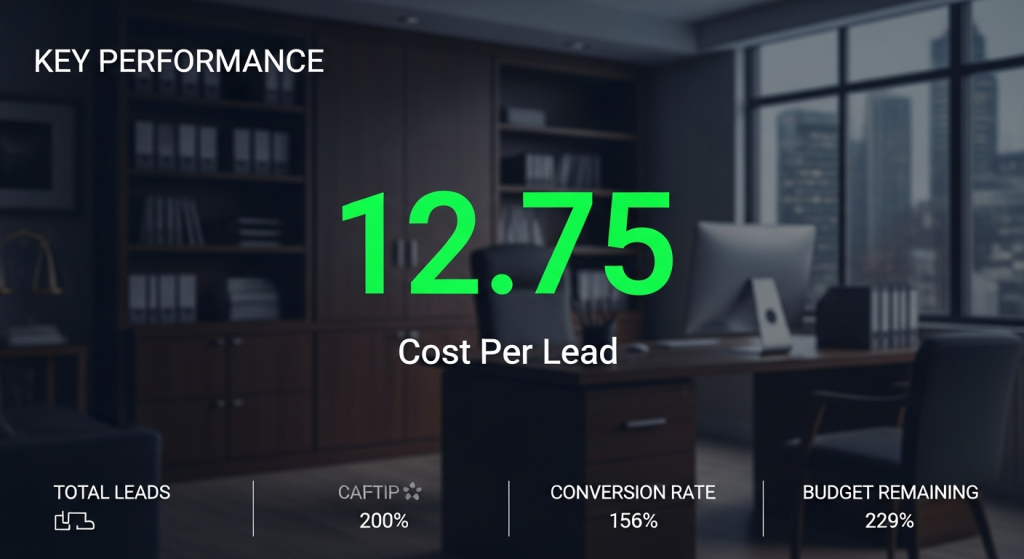
CPL Over Clicks: The Only Metric That Pays Bills
Marketing is not a cost center designed for visibility theater; it is a capital expenditure. Every dollar allocated must be treated as an investment expected to generate a predictable, measurable return. The pervasive obsession with volume metrics—impressions and raw clicks—is the primary inhibitor to profitable growth in digital spending. These metrics satisfy reporting requirements but fundamentally fail to address the core mandate of business: generating revenue. The only metric that commands respect in the boardroom and impacts the bottom line is the Cost Per Lead (CPL), specifically when that lead is qualified and exhibits demonstrable intent.
We must shift the organizational focus entirely away from broad reach and toward surgical precision. If a campaign cannot be directly tied to the acquisition of a known prospect, its value is immediately suspect. The discipline required to optimize CPL forces marketing teams to engage in rigorous testing, precise targeting, and continuous optimization of the conversion architecture. This disciplined approach eliminates the wasteful spending that plagues ‘awareness’ budgets, replacing guesswork with predictable unit economics.
The distinction between activity and productivity must be absolute. Impressions measure activity; CPL measures productivity. Accepting impressions as a primary success indicator is a fundamental error in financial judgment. It indicates a lack of confidence in the ability to drive direct outcomes, substituting vague brand lift for tangible sales pipeline contribution. This document explains why impressions are fiscal vanity, defines the characteristics of a high-intent lead, and provides an undeniable argument for why targeted CPL spending, even at small scale, crushes massive awareness budgets.
The Indefensible Vanity of Impressions
Impressions are the ultimate vanity metric, serving no purpose other than inflating reports and justifying broad media buys. They represent potential exposure, not actual engagement, and certainly not commercial intent. An impression means a pixel loaded on a screen, often without full visibility, human interaction, or relevance to the viewer’s immediate needs. To allocate significant capital based on the theoretical chance that someone glanced at an advertisement is an indictment of poor financial governance.
The inherent flaws in impression measurement render them useless for strategic decision-making. These flaws include significant rates of non-human traffic, viewability challenges (ads loading below the fold), and frequency saturation that borders on harassment rather than persuasion. When a campaign reports millions of impressions, the actual number of unique, relevant individuals who saw and processed the message under optimal conditions is a fraction of that figure. Basing budget decisions on the gross impression count is equivalent to measuring the success of a factory by the amount of raw material delivered, ignoring the output of finished goods.
Furthermore, the focus on maximizing impressions incentivizes media buyers to chase the cheapest possible inventory, often resulting in placement on low-quality, irrelevant, or brand-unsafe websites. This pursuit of scale over quality dilutes the message and damages brand equity far more than the low CPL associated with premium, high-intent placements. Impressions measure distribution capacity, which is a technical achievement, but they utterly fail to measure business outcomes, which is the only achievement that matters. The organizational mandate must be to track conversion events, not simply delivery events.
- Impressions do not guarantee viewability: Many impressions are served outside of the user’s active viewport.
- Impressions are susceptible to fraud: Bot traffic significantly inflates impression counts, skewing performance data.
- Impressions lack intent signal: They provide zero indication that the user is in a buying cycle or even passively interested in the product category.
- Impressions prioritize volume: This leads to poor targeting, wasting budget on irrelevant audiences simply to meet reach quotas.
Defining and Acquiring High-Intent Leads
A lead is not merely contact information; it is a prospect exhibiting demonstrable commercial intent. High-Intent leads are those individuals who are actively researching solutions, comparing vendors, or seeking immediate consultation regarding a specific problem your product solves. Defining ‘high-intent’ requires moving beyond simplistic demographic filtering and focusing on explicit behavioral signals captured through precise tracking and lead scoring models.
Intent is established through specific, high-value actions taken within the conversion architecture. Low-intent actions include reading a general blog post or watching an introductory video. High-intent actions are those that signal a deeper commitment and proximity to a purchasing decision. These actions immediately justify a higher acquisition cost because their probability of conversion to revenue is significantly elevated.
The technical implementation of intent tracking is critical. We must utilize sophisticated tracking and behavioral analytics to segment leads based on the quality of their engagement. This allows for differential CPL targets. You should be willing to pay substantially more for a lead who requests a custom price quote than for one who downloads a generic whitepaper. This differentiation ensures capital is routed exclusively toward the most profitable segments of the audience.
- Pricing Page Visits: The user is actively evaluating the cost of solution implementation. This is a primary intent signal.
- Demo Requests/Consultation Bookings: The user is ready to engage with the sales process and requires personalized attention.
- Specific Content Downloads: Accessing detailed technical specifications, implementation guides, or competitor comparison sheets, indicating deep evaluation.
- High Frequency/Dwell Time: Repeated visits to key product pages or spending significant time (>5 minutes) on technical documentation.
The Superiority of CPL Discipline: $400 vs. $4,000
The comparative analysis between a tightly controlled $400 monthly budget focused exclusively on CPL targets and a sprawling $4,000 budget dedicated to ‘Awareness’ is not merely theoretical; it is a fundamental argument about capital efficiency. The $4,000 awareness spend operates under the flawed premise that high frequency and broad reach will somehow magically translate into future sales. This spend is typically untargeted, unoptimized, and its ROI is effectively untraceable in the short to medium term. It is a gamble on delayed recognition, often resulting in zero immediate pipeline contribution.
The $400 CPL-focused budget, conversely, demands absolute fiscal discipline. Every dollar must be strategically deployed against high-intent keywords, specific audience segments (e.g., job titles, industries), and proven conversion pathways. This focus compels the advertiser to relentlessly optimize the landing page experience, the offer quality, and the targeting precision. This budget is not attempting to reach everyone; it is attempting to acquire the four or five most valuable prospects available within that budget constraint.
Consider the unit economics. The $4,000 awareness campaign might generate 4 million impressions and 10,000 low-quality clicks (CTR 0.25%), resulting in 5 form fills from low-intent users who never answer a follow-up call. The CPL is $800, and the effective cost per qualified opportunity (CPO) is undefined, potentially infinite. The $400 CPL campaign, through hyper-targeting, might generate 2,000 high-quality impressions and 50 highly relevant clicks (CTR 2.5%), resulting in 4 high-intent demo requests. The CPL is $100, and the CPO is $100. If the sales conversion rate for high-intent leads is 10%, the $400 campaign generates 0.4 sales opportunities immediately, whereas the $4,000 campaign generates none.
The argument for CPL discipline is one of compounding efficiency. By focusing on CPL, the marketing function is continuously lowering the acquisition cost of future revenue. Every optimization cycle—improving ad copy, refining negative keyword lists, testing new offers—directly decreases the CPL. The awareness spender, however, is merely paying for more distribution, constantly chasing diminishing returns on low-quality inventory. The CPL approach builds a predictable engine; the awareness approach buys a temporary megaphone.
- $400 CPL Strategy Outcomes:
- Guaranteed pipeline contribution (even if small).
- Continuous data loop for optimizing conversion rates.
- Measurable, traceable ROI tied directly to sales activity.
- Higher quality leads that reduce sales team churn and inefficiency.
- $4,000 Awareness Strategy Outcomes:
- Vague ‘brand lift’ metrics based on surveys.
- High volume of clicks with negligible conversion rates.
- Budget allocated based on reach capacity, not intent proximity.
- No short-term fiscal accountability for capital expenditure.
The imperative is clear: stop subsidizing ineffective broad media and start funding the direct acquisition of identifiable commercial prospects. Marketing success is not measured by how many people saw your ad; it is measured by how cheaply and predictably you can acquire a customer. The CPL is the only metric that reflects this reality.